
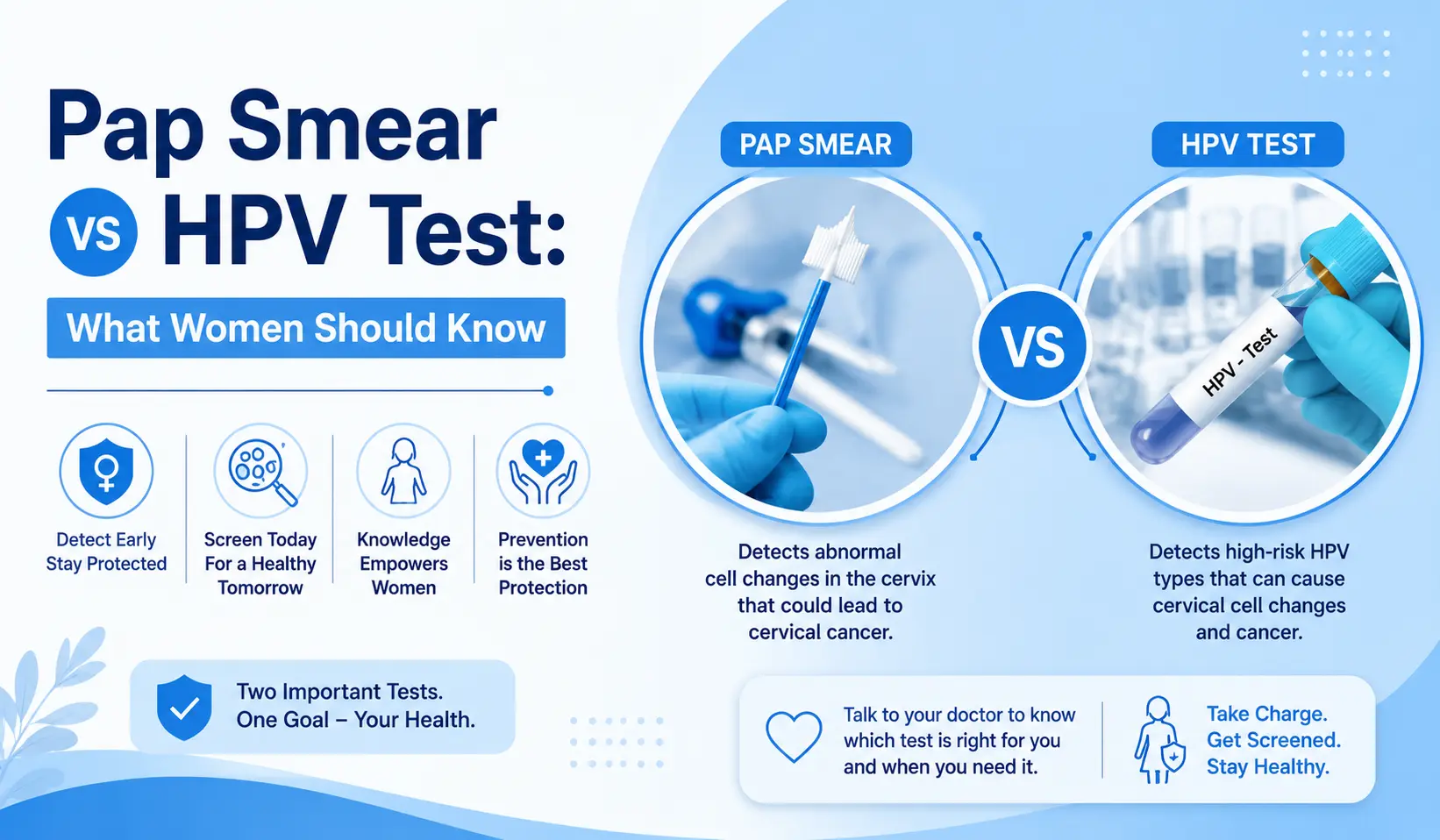
When caught early through screening, cervical cancer is one of the most preventable cancers. But, a lot of women are not aware about the difference between Pap Smear Test and HPV Test. Familiarizing with these essential screening tools can assist women in making educated health decisions and taking preemptive measures against cervical cancer.
What is a Pap Smear Test?
Pap Smear Test: It is a routine screening test for identifying excess cells of the lower part of uterus, cervix. In a test, an individual healthcare worker gently collects some cervical cells and then sent to the laboratory for evaluation.
The main work for which Pap Smear Test is done and used to check/carry out before any cancer development or not. As these changes frequently take place without any symptoms, regular screening is key to early cervical cancer diagnosis.
What is an HPV Test?
HPV Test: A HPV test is used to find out the presence of high-risk (HR) types of Human Papillomavirus (HPV), a common virus which cause most cervical cancer cases. The collection of this sample is similar to that of a Pap test and should be performed in well under twenty minutes with little discomfort.
Unlike Pap Smear, HPV Screening Test does not detect abnormal cells. Rather, it determines if you have high-risk HPV infections. Early detection of these infections can inform health care providers, who can in turn conduct risk assessments and recommend follow-up measures.
Pap smear vs HPV Test: Key Differences
When discussing Pap smear vs HPV Test, it is important to understand that both tests serve different purposes:
Pap Smear Test
Detects abnormal cervical cells. It identifies existing structural cell abnormalities in the cervix that could eventually turn into cancer if left untreated.
HPV Test
Detects high-risk HPV infections. Rather than looking at abnormal cells, it identifies the presence of the actual virus that might cause those cell changes later.
Core Focus
Pap tests identify existing cellular abnormalities that require immediate management or removal, while HPV tests identify potential viral risk factors.
Why Cervical Cancer Screening Matters
Early in its pathogenesis, cervical cancer seldom exhibits symptoms and may take years to develop. Hence regular women’s health screening plays a crucial role here! It is important that screening detects abnormal conditions before they have the opportunity to progress into malignancy.
Bottom line, HPV and Cervical Cancer are linked as you can imagine women understanding the HPV – to have cervical cancer leads them into taking preventive measures. Most cases are treated better if diagnosed early.
Who Should Get Tested and When?
According to common cervical cancer screening guidelines for women, routine testing is recommended as follows:
If you are wondering, when should women get a Pap smear? or When should women get an HPV Test? The best approach is to consult a qualified gynecologist for personalized clinical advice.
Benefits of Early Detection and Preventive Oncology Care
Do not hesitate to conduct HPV tests and regular screenings. It helps you to identify cervical changes before they become cancerous and also reduces the risk of advanced disease. Similarly, preventive oncology care will help with timely intervention and awareness regarding caretaking cervical health.
Women should take the most active role in prevention for their long-term reproductive and overall health by scheduling regular screenings.

Questions & Answers
The answer depends on age, medical history, and screening recommendations. In some cases, healthcare providers may recommend both tests together (co-testing) for enhanced screening accuracy, as they detect different aspects of cervical health.
According to common cervical cancer screening guidelines, women should start routine Pap smear screenings at age 21 and discuss their regular frequency with their gynecologist, usually every 3 years if previous results were normal.
Women aged 30–65 are generally recommended to get an HPV test (either alone or combined with a Pap smear as co-testing) every 5 years if they meet standard risk profiles and previous screenings were negative.
Conclusion
Go ahead conduct HPV tests and regular screenings. It enables you to detect cervical changes in their precancerous stages and it also decreases the risk of more advanced disease. Likewise, preventive oncology care will also assist with timely intervention and understanding of caretaking cervical health.
For personalized preventive oncology care and comprehensive women’s healthcare services, CosmoGyn Clinic by Dr. Neelam Singla offers expert support focused on early detection, prevention, and long-term wellness.