
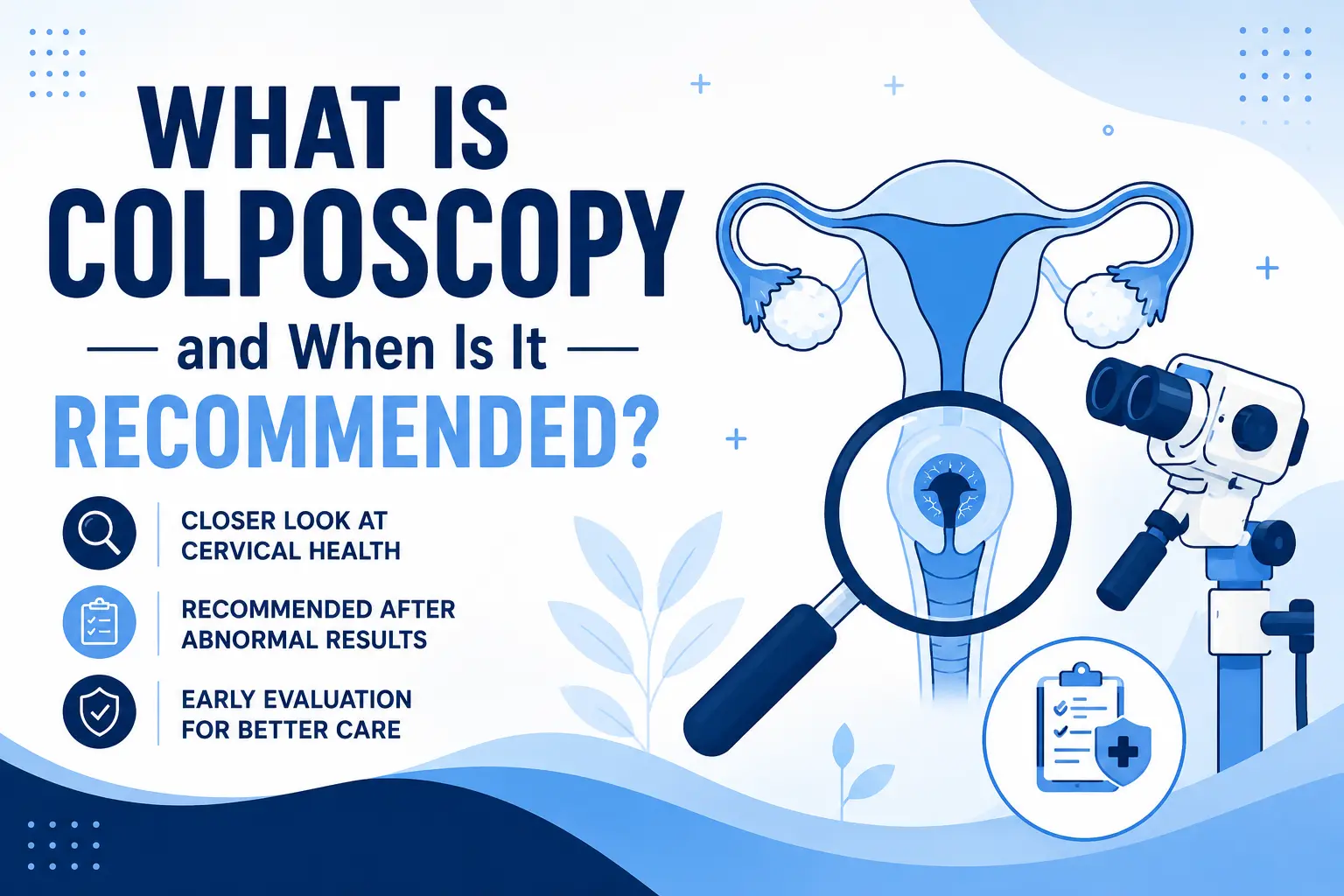
Cervical screening helps doctors identify changes that may need a closer look. When a screening result is abnormal, your gynecologist may recommend another examination called colposcopy. If you are searching for What Is Colposcopy, it is a procedure that gives the doctor a clearer view of the cervix and helps identify areas that may need further evaluation. At CosmoGyn by Dr. Neelam Singla - Best Gynecologist in Siliguri, women can discuss their cervical screening results and understand what the next step may involve.
What Is Colposcopy?
Colposcopy is a diagnostic procedure used to examine the cervix more closely. A doctor uses a special magnifying instrument called a colposcope to view the cervical tissue. During the procedure, the doctor may apply a solution to the cervix. This can make unusual areas easier to see. If a specific area needs further investigation, a small tissue sample may be taken for a biopsy. A colposcopy does not mean that you have cancer. It is often used to understand abnormal cervical changes more clearly.
Why Is Colposcopy Recommended?
A gynecologist may suggest colposcopy when a cervical screening result needs further investigation. The decision depends on your screening history and the type of changes found. If your screening results require further evaluation or treatment, your gynecologist can explain the options available based on your condition. Colposcopy and Thermal Treatment in Siliguri may be considered in appropriate cases after a proper clinical assessment.
Common Reasons for Colposcopy
There can be different reasons for recommending a colposcopy. Your doctor will consider your individual results before deciding whether the procedure is needed.
Abnormal Pap Smear
To examine the cervix more closely.
HPV-Related Changes
To check for visible cervical abnormalities.
Unusual Cervical Appearance
To investigate an area that looks abnormal.
Persistent Abnormal Results
To understand changes that continue over time.
Suspected Cervical Abnormality
To decide whether a biopsy or further testing is needed.
Being referred for a colposcopy procedure does not automatically mean that cervical cancer is present. In many cases, the examination is performed to understand cervical changes before deciding on further care.
What Happens During a Colposcopy?
Knowing what happens during the procedure can make the experience easier to understand. A colposcopy is usually performed in a clinical setting and involves positioning similar to a routine pelvic examination. The gynecologist uses a speculum to view the cervix. The colposcope stays outside the body and provides a magnified view of the cervical tissue. A special solution may then be applied to highlight areas that need attention. If the doctor finds an area that requires closer evaluation, a small biopsy may be taken and sent for laboratory analysis.
The procedure can vary depending on what the doctor sees during the examination.
Does Colposcopy Hurt?
A colposcopy is generally well tolerated. However, some women may feel pressure or mild discomfort during the examination. If a biopsy is taken, there may be brief cramping or discomfort. Light spotting can also occur afterward. Your gynecologist can explain what you may experience based on your individual situation.
How Should You Prepare for a Colposcopy?
Your doctor may provide specific instructions before the procedure. Follow these instructions carefully and share any relevant medical information with your gynecologist. Tell your doctor about medicines you take and mention if there is a possibility that you may be pregnant. If you have questions about the procedure, discussing them before the appointment can also help you feel more comfortable.
What Happens After Colposcopy?
You may have mild discomfort or light spotting after the examination. This can be more noticeable when a biopsy has been performed. If a biopsy is taken, the tissue is examined in a laboratory. Your doctor will discuss the results with you and explain whether any further testing, monitoring or treatment is required.
That's why it is important to attend your follow-up appointment and discuss the results with your gynecologist.
Colposcopy at CosmoGyn by Dr. Neelam Singla
CosmoGyn by Dr. Neelam Singla provides gynecological care focused on women's individual health needs. If you have received an abnormal cervical screening result or have been advised to undergo colposcopy, a consultation can help you understand why the procedure has been recommended. The right evaluation can provide clarity about your cervical health and help your doctor decide the appropriate next step.

Questions & Answers
Colposcopy is a diagnostic procedure that uses a magnifying instrument called a colposcope to examine the cervix closely. It helps doctors identify areas that may need further evaluation after an abnormal cervical screening result.
A colposcopy is generally well tolerated. Some women may feel pressure or mild discomfort during the examination. If a biopsy is taken, there may be brief cramping or discomfort, and light spotting can occur afterward.
You may have mild discomfort or light spotting after the examination. If a biopsy is taken, the tissue is examined in a laboratory. Your doctor will discuss the results with you and explain whether further testing, monitoring, or treatment is required.
Conclusion
Understanding what is colposcopy can make the process less confusing when your doctor recommends it. Colposcopy allows a closer examination of the cervix and can help identify areas that may need further evaluation. An abnormal screening result does not automatically mean cancer. Following your doctor's advice and completing recommended follow-up can help ensure that cervical changes are assessed at the right time.